
IRS Mileage Guide


Home » Mileage Tax Deduction » IRS mileage rate 2027
November 12, 2026
The IRS mileage rate 2027 has not yet been announced. The IRS typically publishes its new standard mileage rates in December, ahead of the next tax year. Until then, the latest confirmed business rate is 76 cents per mile for July through December 2026. Read on to learn when to expect an update and how to prepare.
TL;DR
- The IRS mileage rate 2027 has not been announced. The new rates are expected in December 2026.
- The current business rate is 76 cents per mile for July through December 2026.
- The 2027 rate could rise or fall. Recent trends suggest increases, but nothing is confirmed.
- Prepare for 2027 now. Review your 2026 mileage log and record your year-end odometer reading.
- MileageWise makes tracking easier. Automatically log trips and prepare tax-ready records with a free 14-day trial.
Table of Contents
Has the IRS Announced the 2027 Mileage Rate?
No. As of November 12, 2026, the IRS has not released the official 2027 mileage rate. This includes rates for business, medical, moving, and charitable mileage. The IRS generally sets new rates for January 1 of each year. These rates help eligible taxpayers calculate vehicle-related deductions and employers determine mileage reimbursement.
For now, the federal mileage rate 2027 remains unconfirmed. Any specific numbers circulating online should be treated as estimates unless they come from an official IRS announcement. You can check the latest figures directly on the IRS standard mileage rates page.
When Will the IRS Announce the 2027 Mileage Rate?
If you’re wondering when will IRS announce 2027 mileage rate figures, December 2026 is the most likely timeframe based on previous announcements. However, the IRS has not confirmed a release date.
Here’s when the agency announced its standard mileage rates over the past four years:
| Tax Year | Announcement Date | Original Business Rate |
|---|---|---|
| 2026 | December 29, 2025 | 72.5¢ per mile |
| 2025 | December 19, 2024 | 70¢ per mile |
| 2024 | December 14, 2023 | 67¢ per mile |
| 2023 | December 29, 2022 | 65.5¢ per mile |
All four announcements arrived in December. Still, this pattern does not guarantee that the IRS will follow the same schedule for 2027. Once announced, the new rates are generally expected to take effect on January 1, 2027.
Which Mileage Rate Should You Use Until 2027?
For trips taken in 2026, use the IRS mileage rate that applies to the date and purpose of each trip. A future announcement does not change the rate for miles already driven. You can find a detailed breakdown in our guide to the 2026 IRS mileage rates.
The following rates apply from July 1 through December 31, 2026:
- Business: 76 cents per mile
- Medical: 23.5 cents per mile
- Qualified moving: 23.5 cents per mile
- Charitable: 14 cents per mile
For business trips between January 1 and June 30, 2026, use 72.5 cents per mile instead. For example, 5,000 eligible business miles driven in November 2026 would produce a $3,800 mileage tax deduction using the standard mileage method. That’s a deduction from taxable income, not a $3,800 tax refund.
Employees receiving mileage reimbursement should also check their employer’s policy. The IRS rate is a common benchmark, but private employers are not universally required by federal law to reimburse at that exact amount. Learn more about how mileage reimbursement works and when it applies.
How Does the IRS Set the Standard Mileage Rate?
The IRS reviews nationwide vehicle operating costs when determining its standard mileage rates. The business rate considers both fixed and variable costs, including:
- Gasoline and other fuel expenses
- Vehicle maintenance and repairs
- Insurance premiums
- Vehicle depreciation
- Tires and other operating costs
Medical and qualified moving rates depend on variable operating costs, which explains why they sometimes move differently from the business rate. The charitable mileage rate is different. Federal law sets it at 14 cents per mile, so Congress would need to change the law for that figure to increase.
Why Did 2026 Have Two Mileage Rates?
2026 was an unusual year for mileage deductions. The IRS announced its original rates in December 2025, but later increased several rates because of rising fuel prices. Read more about the 2026 mid-year mileage rate increase and why it happened.
As a result, two sets of rates apply:
- January 1 to June 30: 72.5 cents for business and 20.5 cents for medical and qualified moving mileage.
- July 1 to December 31: 76 cents for business and 23.5 cents for medical and qualified moving mileage.
The charitable rate remained unchanged at 14 cents throughout the year.
This matters when calculating deductions. For example, a self-employed driver with 4,000 eligible business miles in each half of 2026 would have:
- First half: 4,000 × $0.725 = $2,900
- Second half: 4,000 × $0.76 = $3,040
- Total mileage deduction: $5,940
Using a single rate for the entire year would produce an incorrect result. Accurate trip dates are therefore just as important as accurate mileage totals.
How the IRS Mileage Rate Has Changed
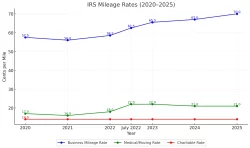
The following table shows the business mileage rate from 2021 through 2026:
| Year | Business Mileage Rate |
|---|---|
| 2026 (July to December) | 76¢ |
| 2026 (January to June) | 72.5¢ |
| 2025 | 70¢ |
| 2024 | 67¢ |
| 2023 | 65.5¢ |
| 2022 (July to December) | 62.5¢ |
| 2022 (January to June) | 58.5¢ |
| 2021 | 56¢ |
Between 2021 and the second half of 2026, the business rate increased by 20 cents per mile, or approximately 35.7%.
It’s reasonable to ask: will the IRS mileage rate go up in 2027? Despite the trend, predicting the 2027 mileage rate would be speculative. The medical and moving rates have fluctuated, while the charitable rate has stayed fixed for decades.
The IRS considers vehicle operating costs, including fuel prices, maintenance, and depreciation. These costs can rise or fall, affecting the final rate. For reliable tax planning, use confirmed rates rather than projected figures.
What Should You Do Before January 1, 2027?
You don’t need to know next year’s mileage rate to prepare accurate records. In fact, getting organized before January makes tax filing much easier.
- Record your odometer reading on December 31. This gives you a clear year-end reference for your vehicle’s total mileage.
- Review your 2026 trips. Check that business and personal drives are categorized correctly.
- Separate the two 2026 rate periods. Use the appropriate rate for trips before and after July 1.
- Save your mileage records. Keep trip dates, destinations, business purposes, and distances. See our guide to maintaining an IRS-compliant mileage log for more details.
- Start your 2027 mileage log on January 1. Record your opening odometer reading and track eligible trips from the beginning.
- Check the official announcement. Apply the confirmed 2027 rates once the IRS publishes them.
Remember that a mileage deduction requires supporting records. Knowing the correct rate is not enough if you cannot substantiate your business travel.
How MileageWise Helps You Prepare for the New Mileage Rate
Waiting for the IRS announcement doesn’t mean you should wait to organize your mileage.
MileageWise helps self-employed professionals and small businesses track eligible trips and prepare mileage logs for tax reporting.
With MileageWise, you can:
- Track mileage automatically: Record new trips without relying on manual notes.
- Recover past trips: Use Google Maps Timeline imports and other tools to help reconstruct missing mileage records.
- Check your records: Use the IRS Compliance Auditor to identify potential issues before filing.
- Generate reports: Organize business mileage into detailed, downloadable records.
That way, when the official 2027 rate arrives, your trip records are already in place. You can focus on calculating your deduction instead of trying to remember months of driving.
Try MileageWise for free for 14 days. No credit card required!
Automatic Mileage Tracker App


Conclusion
The IRS mileage rate 2027 has not yet been announced, but you don’t need to wait to get organized. Review your 2026 mileage records, note your year-end odometer reading, and start tracking your trips from January 1. With MileageWise, you can keep accurate mileage logs and be ready to apply the new rates as soon as the IRS announces them.
FAQ
What is the IRS mileage rate for 2027?
The IRS mileage rate 2027 has not yet been announced as of November 12, 2026. The official business, medical, moving, and charitable rates should be confirmed through the IRS.
When will the IRS release the 2027 mileage rate?
Based on past years, an announcement is expected in December 2026. However, the IRS has not confirmed an exact release date.
Will the 2027 business mileage rate be higher?
It could increase, stay the same, or decrease. Although the business rate has risen in recent years, the IRS uses updated vehicle operating costs to determine its rates.
Is the federal mileage rate the same in every state?
Yes. The IRS standard mileage rate is a federal rate that applies nationwide. However, employers and states may have different mileage reimbursement requirements.
Can I use the 2027 rate for mileage driven in 2026?
No. Use the rate applicable when the trip occurred. For 2026 business mileage, that means 72.5 cents per mile through June 30 and 76 cents per mile from July 1 onward.
Do I need to wait for the 2027 rate before tracking mileage?
No. Start recording trips immediately. You can apply the official mileage rate once it is announced, but reconstructing missing trip details later can be difficult.
Where can I learn more about mileage deductions?
Read IRS Publication 463 for detailed recordkeeping and vehicle deduction rules. You can also watch this video explaining standard mileage deductions. The video is older, so use the latest IRS rates for current calculations.